October 9, 2026 · Updated November 3, 2026
Is AI art copyrightable? A plain guide for 2026
Is AI art copyrighted? In the US, a human must have made the creative choices. What the Copyright Office says and how to keep your part.
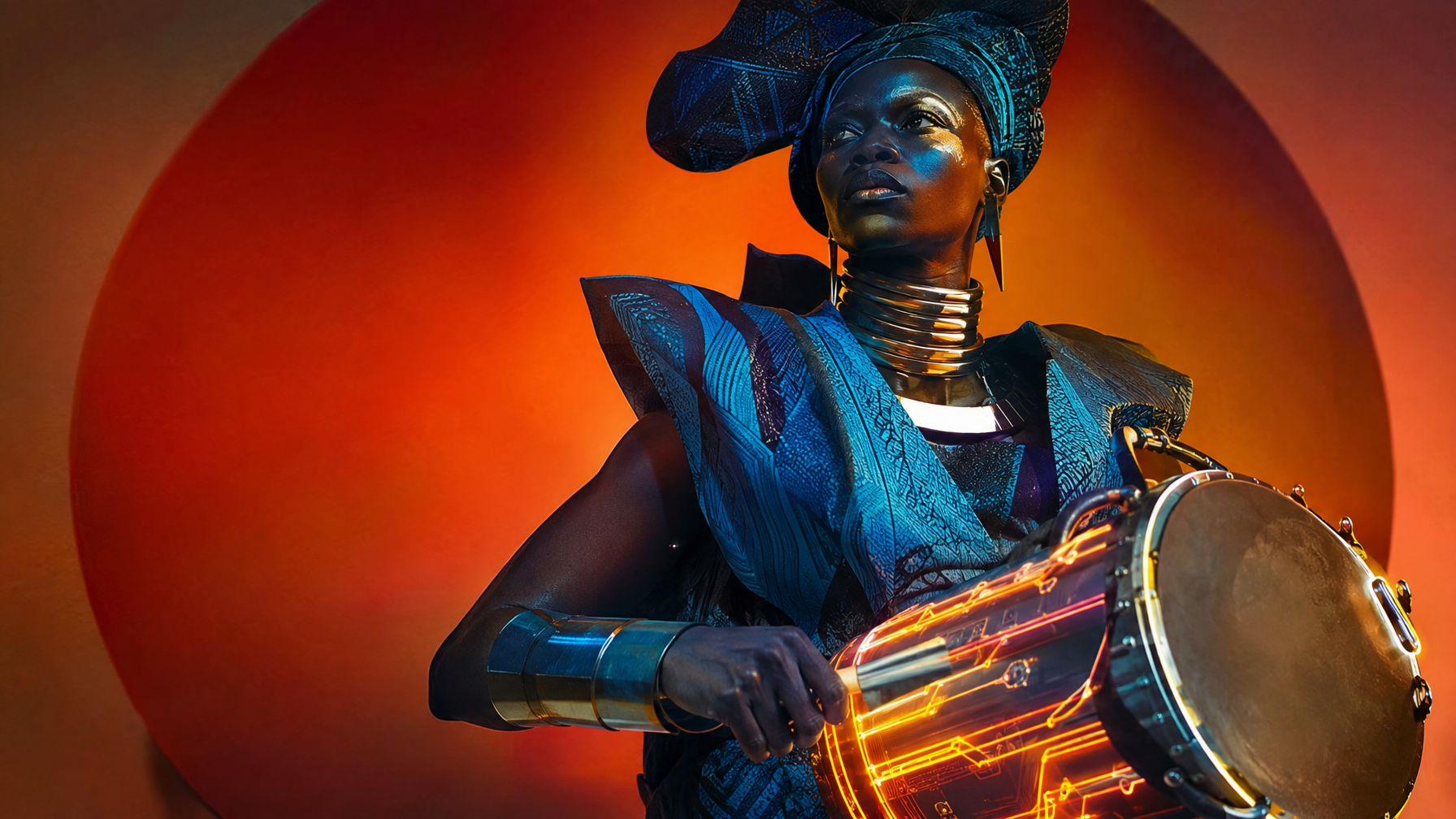
People ask one question about AI pictures more than any other: do I own what I made? In the United States, the answer is partly. It depends on how much of the work was yours. This guide explains why, in plain words. It also shows what you can do in genvi to keep the parts that are yours. It is general information, not legal advice. Everything here is as of November 2026, and it is mostly about US law.
Is AI art copyrighted? The short answer
Copyright is the right to stop other people copying your work. In the US, it starts with a human being. A picture that a machine made, with no creative choices from you, is not protected. A picture where you made real creative choices can be protected. But only the part that came from you is protected.
So there are three cases. You type a short prompt (the words that ask the AI for a picture) and take the first result: probably not protected. You add your own photo, drawing, words or layout, or you change the result by hand: your part can be protected. You use AI as a helper in a bigger work, like a book or a film: the whole work can still be protected.
What the US Copyright Office says
The Copyright Office is the US government body that registers copyright. In January 2025 it published part two of its report on AI, called Copyright and Artificial Intelligence, Part 2: Copyrightability. Its main points, in its own summary, are:
- Pictures made by AI from your instructions can be protected "only where a human author has determined sufficient expressive elements."
- A prompt alone is not enough. Protection does not reach "the mere provision of prompts."
- A human-made work that you can still see in the AI output is protected. One example is your own drawing that the AI then restyled.
- Creative arrangements or changes that you make to the output can be protected.
- Using AI to help make a work does not, by itself, stop the work being protected.
The Office also looked at whether the law should change to protect AI outputs more. It said the case had not been made. Its summary is on its news page.
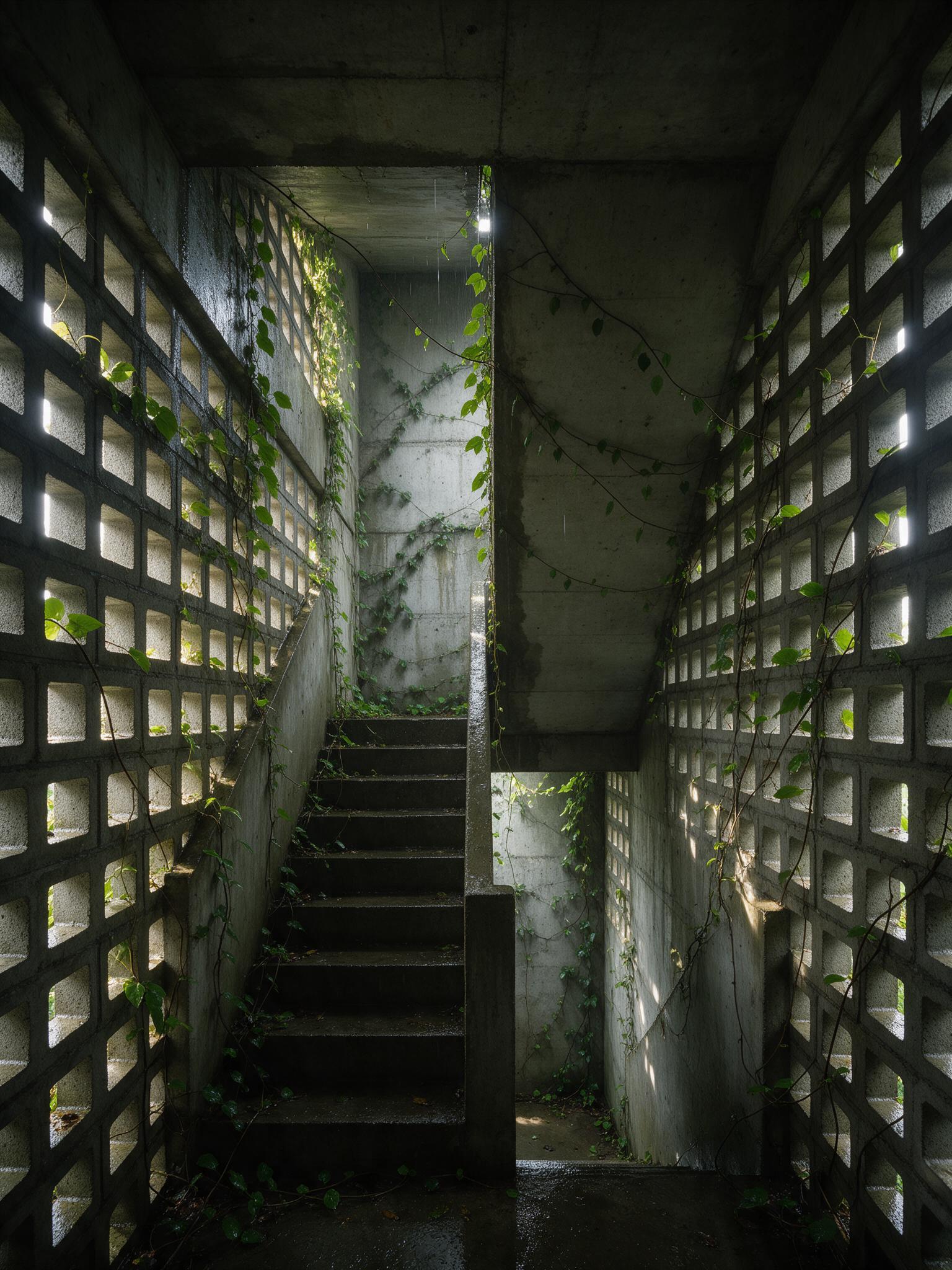
A picture made from a written prompt alone, such as this stairwell made with Seedream v5 Pro. With no work of yours added, this is the case the Copyright Office says is not enough.
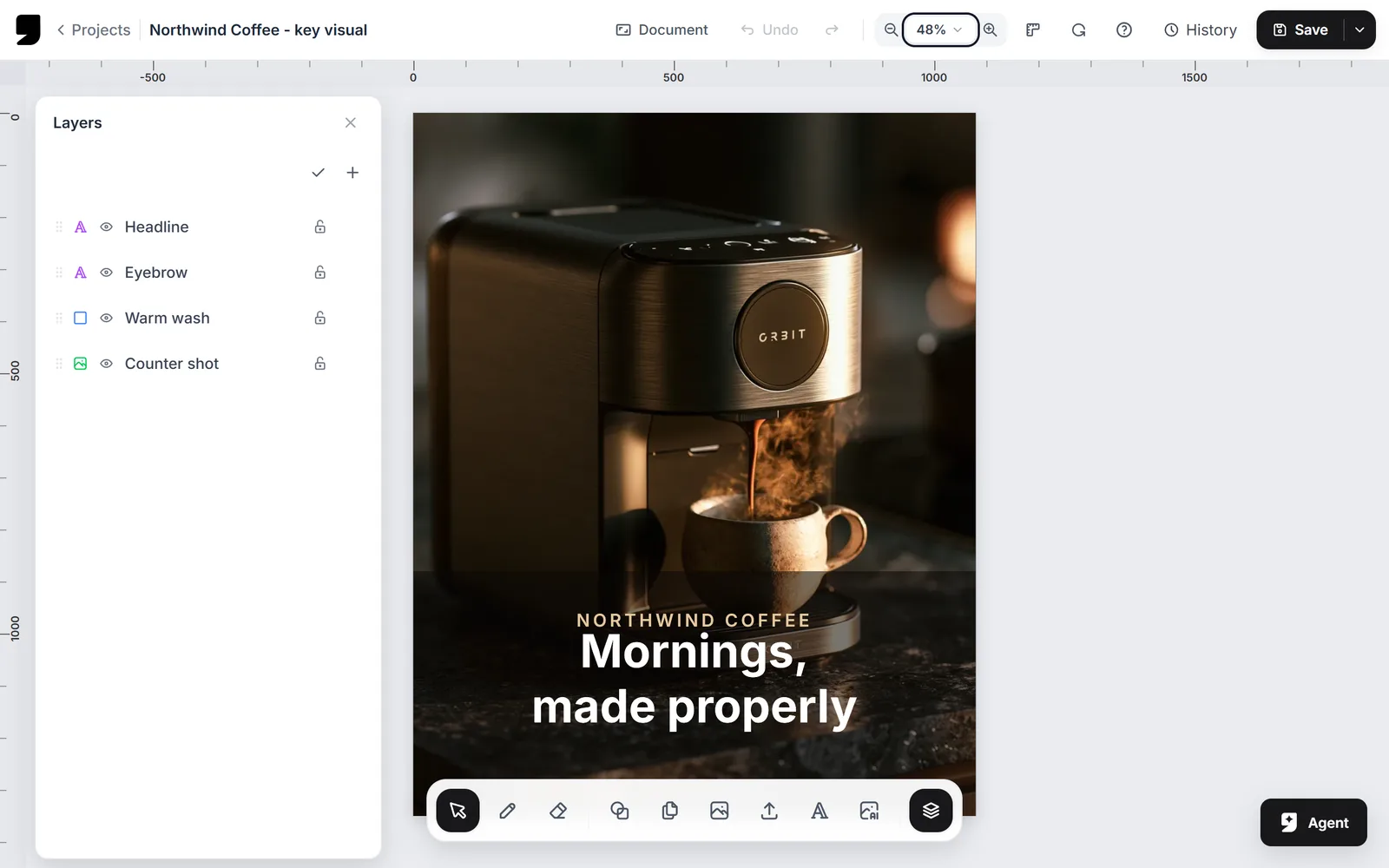
A design built in layers: a photo, a colour wash and two lines of text. Each layer is a choice a person made.
The court case that people mention
A computer scientist named Stephen Thaler asked to register an image that his AI system made. He named the machine as the author. The Copyright Office said no, and the courts agreed.
The appeals court in Washington, D.C. called human authorship a "bedrock requirement of copyright." The US Supreme Court declined to hear his appeal on 2 March 2026, so that ruling stands. See this summary from Jones Day.
Two things to know. The Supreme Court gave no reason when it declined, so it added nothing new. The case was also about a machine named as the only author. It did not say how much human work is enough. The appeals court noted that the rule does not bar work made "with the assistance of" AI.
Outside the US
Rules differ by country, so check yours. One example is the UK. UK law has a special rule for "computer-generated works," meaning works made by a computer with no human author. In March 2026 the UK government published a report on copyright and AI. It said that this special rule should be removed. It also said that work made with AI help should still be protected. The report is not a law, and we found no change to the law yet. If you work in another country, ask a local lawyer.
Step by step: keep what is yours
Step 1. Start with something of your own
A photo you took, a sketch, a logo, or a paragraph you wrote. In genvi you can add these as reference pictures. The result is then built on your work, and your work stays visible in it. Only use pictures you have the right to use.
Step 2. Make real changes by hand
Open the picture in the Image Composer. It works in layers, like sheets of clear plastic stacked on top of each other. You can add text, shapes and extra pictures. You can crop, hide parts of a picture, and paint. Choosing what goes where is the kind of human choice the Office talks about.
Step 3. Combine several results
Picking and arranging many pieces into one new design can be your own creative work. Ask for several takes, pick the parts you like and put them together on one canvas.
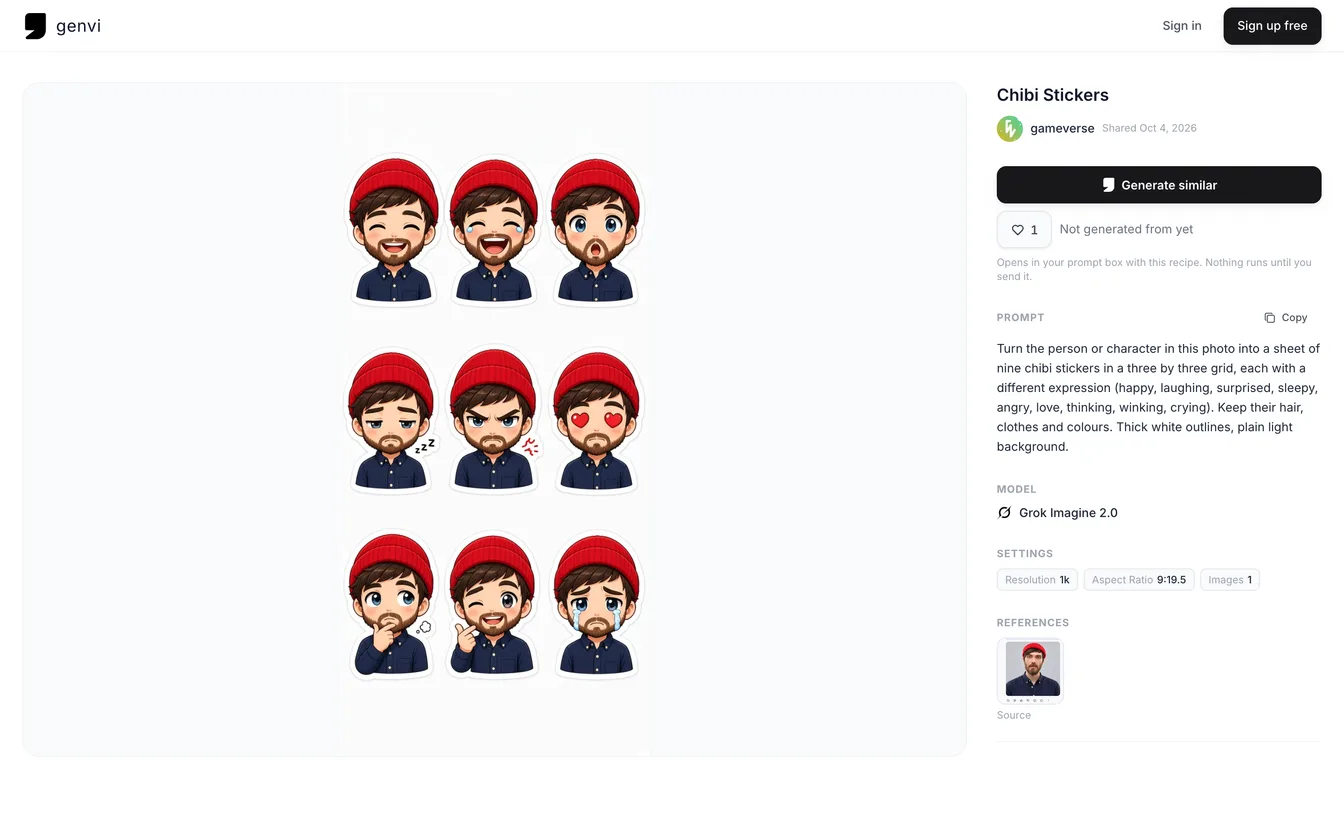
A shared Explore post shows the prompt, the model (Grok Imagine 2.0) and the settings next to the picture. If you choose to share the recipe, it becomes a public record of how you made it.
Step 4. Keep your records
Save your starting files and your genvi project. Your layers show what you added. If you share on Explore, you can choose to show the prompt and settings. Our terms say you keep all rights to what you create, upload or generate. Section 6.2 adds this: "Subject to the terms of the underlying AI providers, you own the outputs generated through your workflows. However, we make no warranties regarding the uniqueness or originality of AI-generated content."
Step 5. Be honest when you register
If you apply to register a work, the Copyright Office asks you to name any AI-made parts that are more than minimal. You claim only the parts you made. This comes from its March 2023 registration guidance. Check the Copyright Office site for the current rules before you file.
Owning a picture is not the same as owning its copyright
Under genvi's terms, you own the outputs you generate. That is a promise about the rules between you and us. It does not decide whether a court would treat a picture as protected. Both can be true. Nobody at genvi will claim your picture. A stranger may still be free to copy a picture that has no human authorship. For selling and using pictures, read can you use AI images commercially.
What it costs
Reading and editing in the Image Composer has no extra charge. Each picture you generate shows its price before you run it. See what AI credits are for how that works.
FAQ
Can I put a copyright notice on an AI picture?
You can write anything, but a notice does not create protection that the law does not give. It is better to make the picture more your own.
Can two people end up with the same picture?
It is unlikely with a long, specific prompt. But our terms make no promise about originality. Do not count on a picture being one of a kind.
Does editing a picture with a filter count?
Probably not on its own. The Office looks for creative choices. A one click filter is a small choice. Rearranging, drawing and writing are bigger ones. Every case is judged on its facts.
Will this change?
It might. Courts, the Copyright Office and lawmakers are all still working on it. Check the sources linked above for updates.
This is general information, not legal advice. For a real decision about your work, ask a lawyer who knows copyright in your country.