November 2, 2026
Why weird AI influencers go viral, and why spikes fade
Why weird AI influencers spread fast, what one observer reported about their numbers, and why attention can drop sharply.
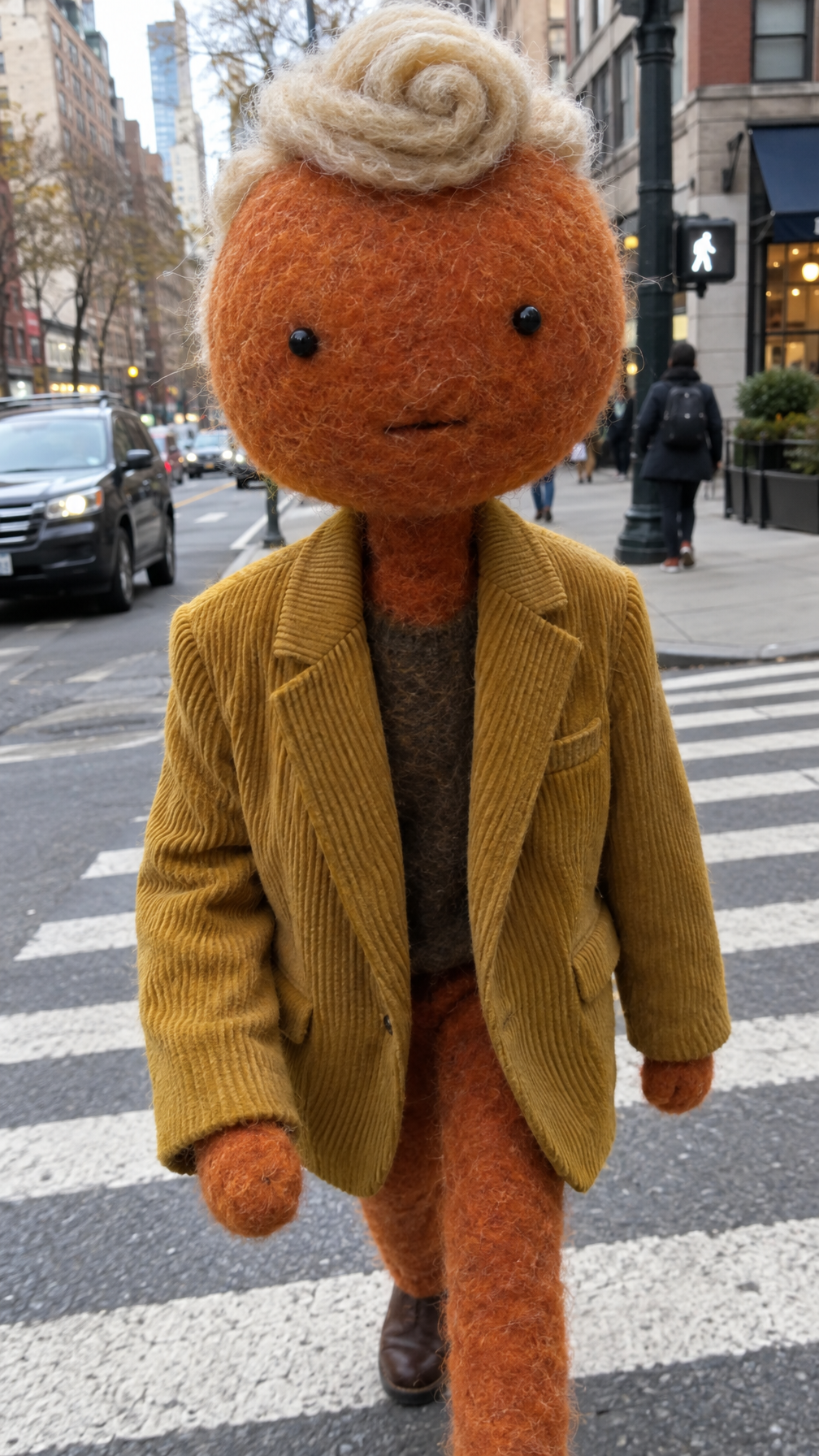
Weird AI influencers are invented characters with strange faces or materials, shown in short videos. In October 2026 many people noticed them. Here is why they spread so fast, and why attention can fade just as quickly.
We make tools for AI pictures, so we watch this trend closely. We also want to be fair about what is known. Most of the numbers below come from one writer who watched one set of accounts, so treat them as a snapshot, not a rule. The pictures show our own original characters, made for our guides.
What is happening
Semafor reported on 7 October 2026 that Higgsfield, an AI video company, launched a tool for building custom AI influencers. Higgsfield's own page describes a character builder and a video engine (Higgsfield). Semafor described the characters as looking realistic but not quite of this world, with geometric haircuts, long necks and exaggerated proportions. It quoted a Higgsfield spokesperson: "A flawless face is the fastest way for a character to read as generic AI."
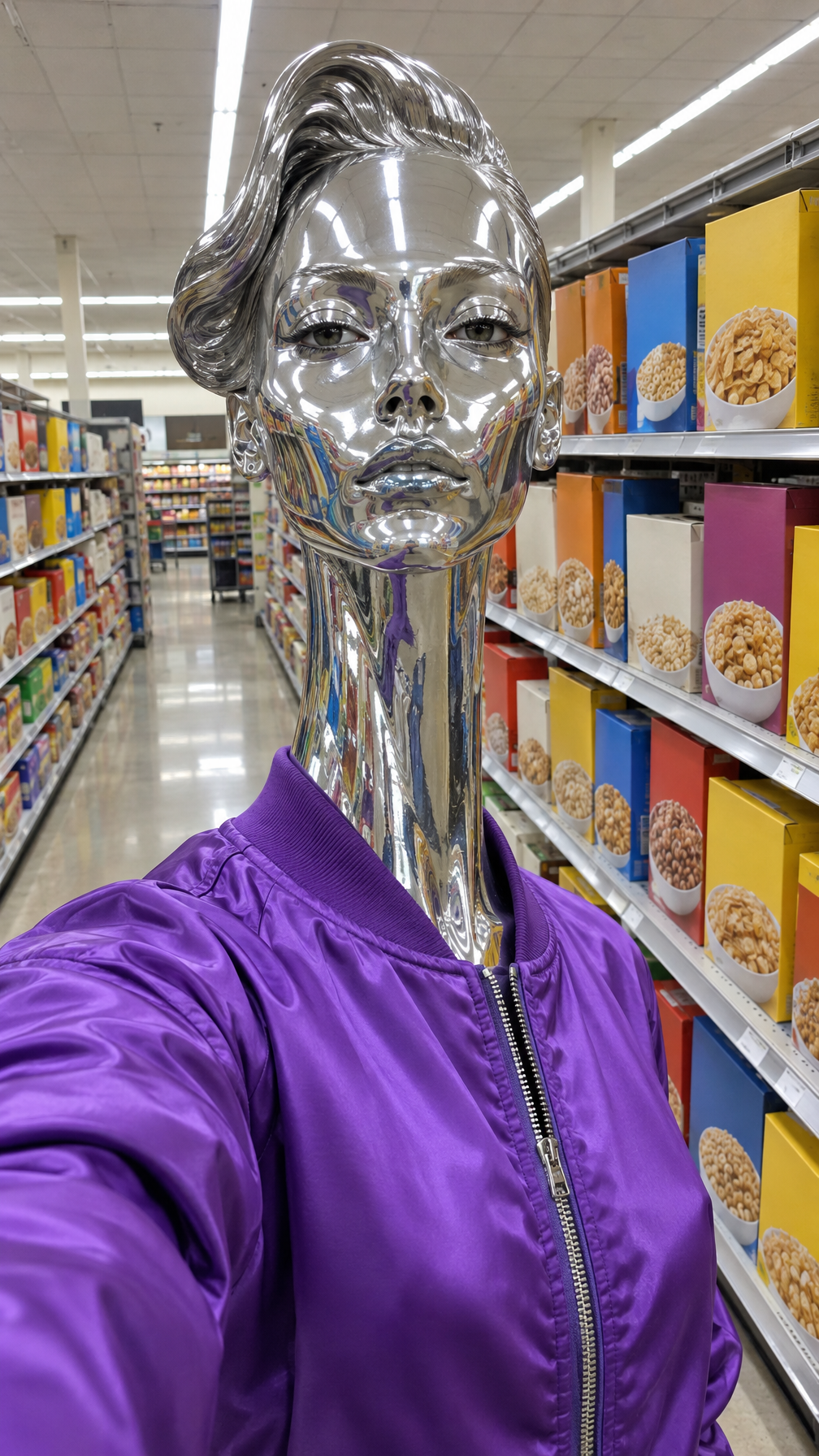
Oriel Vance, one of our original characters, in a supermarket aisle. Made with GPT Image 2.5 Flare.
Why weird works
A writer on the site Furkan Mind posted a case study on 6 October 2026 after watching Instagram Reels. It is one person's view, and the text is a machine translation, so we read it with care. Still, the reasons it gives are easy to follow:
- Surprise. Luxury influencer videos often follow one polished template. A cartoon face in a Rolls-Royce breaks the pattern, so you stop scrolling.
- Harmless absurdity. The characters never smile and the scenes are silly. People laugh instead of feeling uneasy.
- An exaggerated style. A face that is clearly not human avoids the creepy feeling of an almost-real one.
- Made to be sent. The writer argued that shares are the real measure, because people send these videos to friends.
- A question. Viewers argue in the comments about whether the person is real.
Our own view, from making these characters, matches one point. The contrast between a strange body and a dull place does much of the work. Our prompt guide uses the same idea.
The numbers, and how to read them
The same writer gave a snapshot in a case study. One account's top Reel had 76.1K likes, 138K shares and 20M views. So shares ran about 1.8 times likes. Higgsfield's own ad, by comparison, had shares at about a quarter of its likes. This is one night of looking, not a study.
Why most spikes fade
The same writer saw how quickly attention can leave. One account fell from 9.7M views to 367K in two days. Another dropped from about 64.7M views (18 to 20 September) to about 2.2M (27 September to 2 October). One account grew from 5M to 20M views and gained 170K followers in 8 days. Big swings both ways.
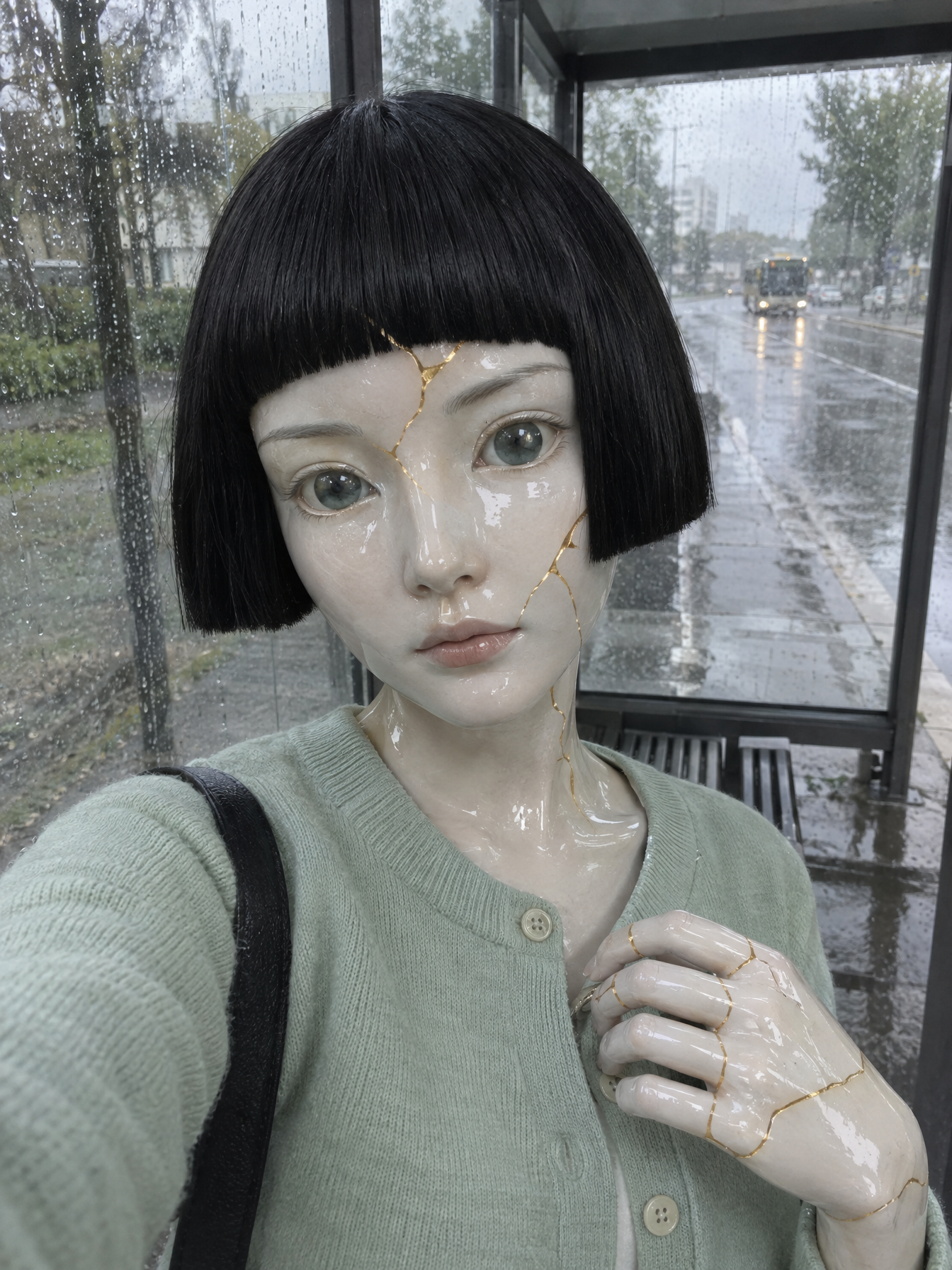
Mabel Quill, another original character, waiting at a bus stop. Made with GPT Image 2.5 Flare.
What does that tell us? A strange face can earn attention, but keeping it takes more: a name, a repeatable format and something new each time. Higgsfield's own creator guide says distinctive beats polished in the feed. It also advises building AI disclosure in from the start (Higgsfield guide). A third-party guide from Aboveyellow suggests posting one repeatable format daily for two weeks before judging how it is going.
A fair counterpoint
Not everyone agrees that weird beats real. A vendor, Sozee, claims that realistic faces with small imperfections get two to three times more engagement. Sozee sells a realism product, and we could not check the claim, so weigh it as marketing.
There are real risks too. Semafor reported that some of these accounts promote memecoins. A third-party guide from Aboveyellow warns against crypto tokens tied to a character. One observer reported that some viewers could not tell whether a character was real, which is why we recommend a clear label. Read our disclosure guide.
What this means if you want to try
Make your own character, not a copy of a real person or a film character. Commenters compared several viral examples to a famous film character. That is a copyright risk, so avoid it. Start with how to make a weird AI influencer, then turn it into video. For the basics, see how to make an AI influencer. For a side-by-side with Higgsfield, see genvi vs Higgsfield.
The trend may fade. The skill underneath, keeping one character the same across many pictures, will still be useful.