September 7, 2026
Define a character once and use it everywhere
A practical guide to writing a reference that holds a character together across a dozen generations, and to the descriptions that quietly fail.
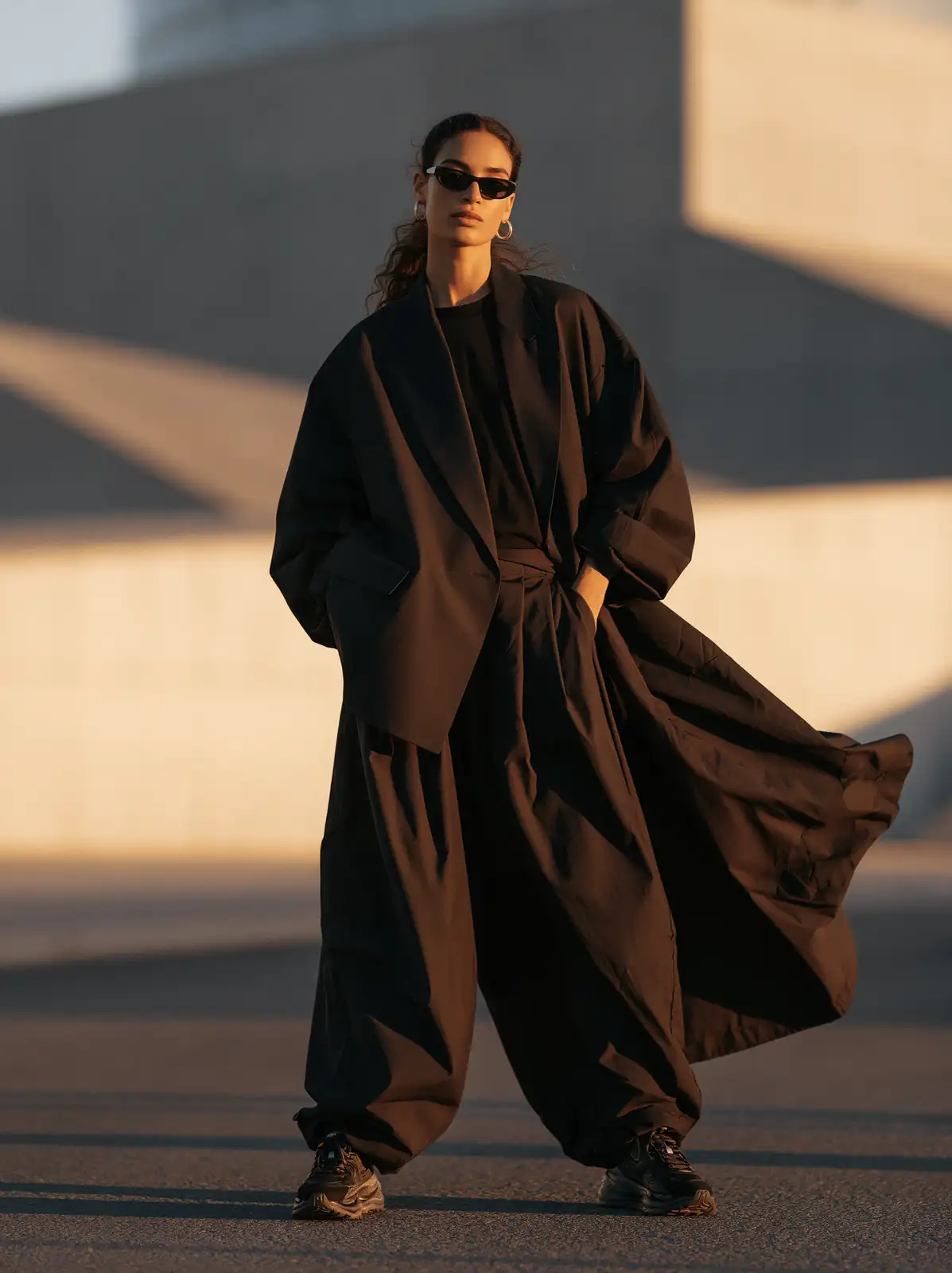
Consistency isn't really a model problem, it's a briefing problem. Give a model the same words twice and you get roughly the same person twice. The work is writing words worth repeating, and then never having to type them again.
What's in a reference
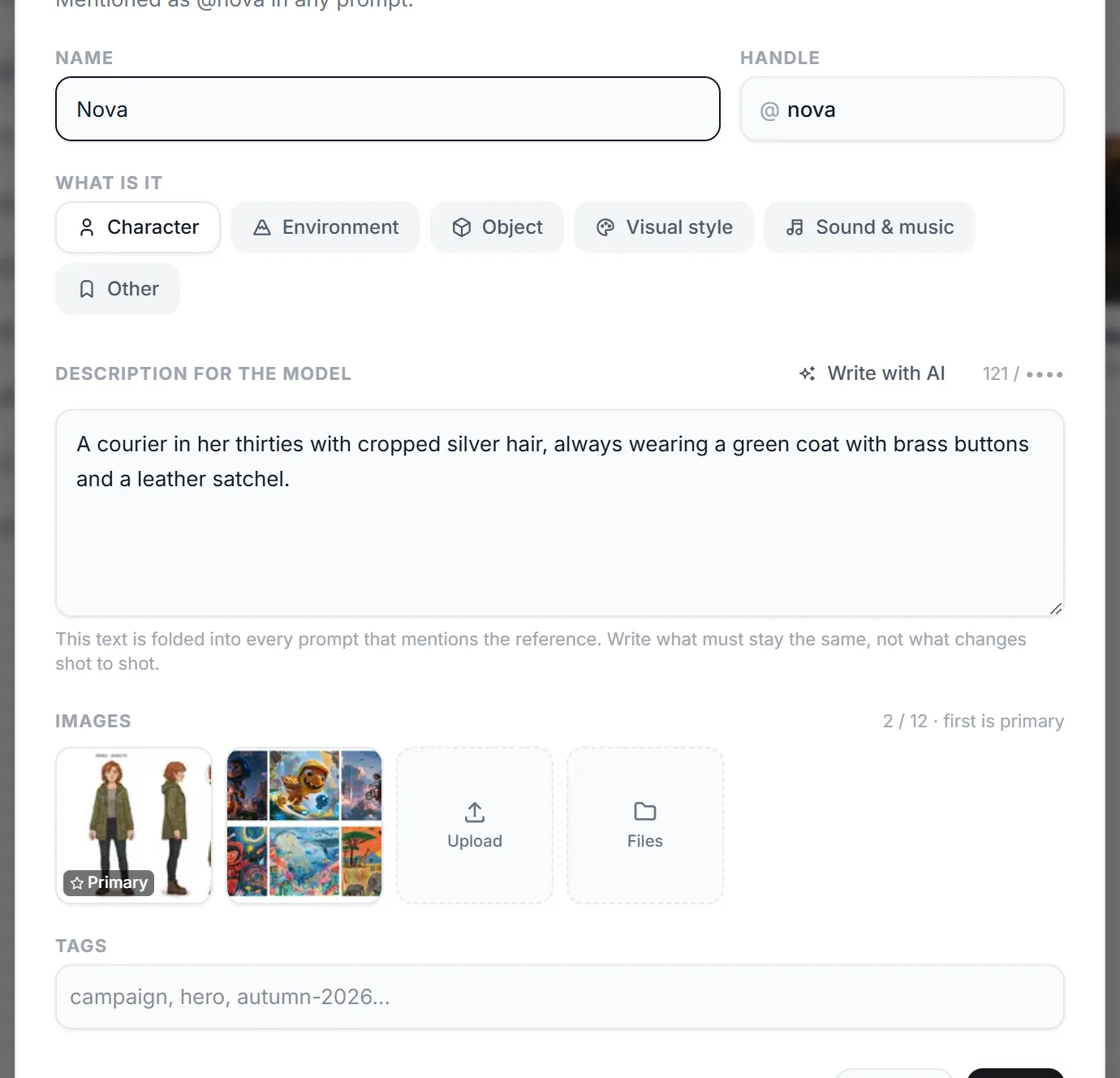
A handle, a kind, a description written for a model, your pictures, and tags. The first picture is the primary one.
The handle is what you type. The description is what does the work. The pictures back it up, and the first one gets sent when a model only accepts a couple.
Write what stays the same
This is the whole craft and it's easy to get backwards. A reference describes the constant, not a moment:
| Travels well | Doesn't travel |
|---|---|
| Always the green wool coat with brass buttons | Standing in a doorway |
| Cropped silver hair, late thirties, wiry build | Smiling at the camera |
| A leather satchel worn across the body | Golden hour, shot from below |
Nothing in the right-hand column is wrong, it's just in the wrong place. Camera angle, light and mood belong in your prompt. Put them in the reference and every single generation comes back looking identical.
Be specific about what drifts
Some things wander much more than others: hair, age, build, materials, the exact shape of a logo, the era of a garment. Spend your words there. "Wearing a coat" leaves the model a decision to make, and it'll make a different one every time.
Then stop retyping it
Type @ in any composer and pick your reference. Your description is appended word for word and the pictures ride along. On a canvas, a Reference node does the same job with wires instead of words, which is nicer when several generations share one subject.

Four keystrokes instead of a pasted paragraph, and the same paragraph every time.

Wired instead of typed. Swap the reference and everything downstream follows it.
Two habits worth forming
- Save the good result back. When a generation nails the character, hand it to the reference. Your library gets stronger the more you use it.
- Bundle what always travels together. A cast, or a character plus their world plus the grade, goes in a set so one mention brings all of it.