September 3, 2026
Selling a building that does not exist yet
Architectural visualisation is the rare case where the geometry is fixed and only the feeling is up for debate. That turns out to suit generative work very well.
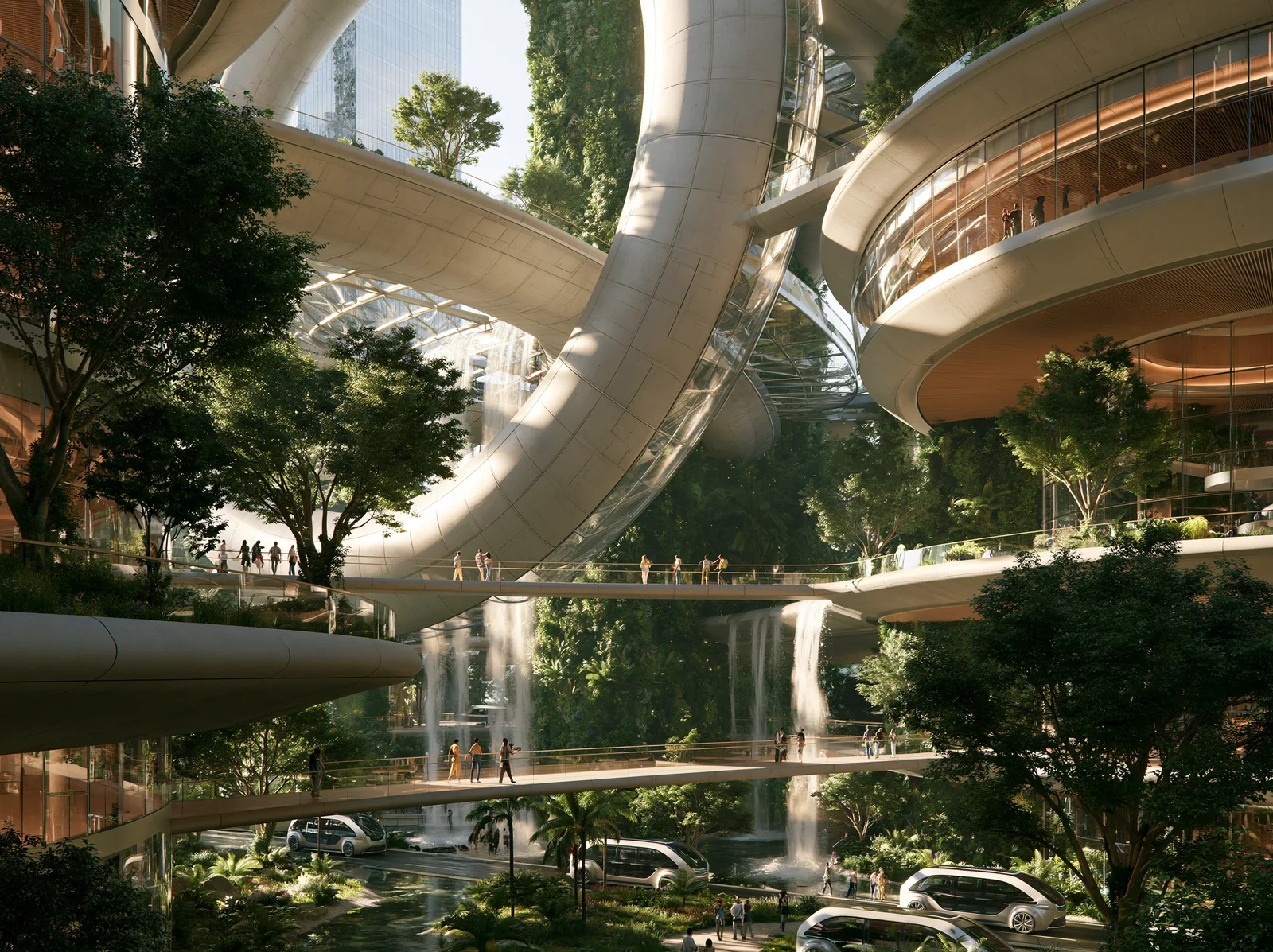
Most generative work invents its subject. Architectural visualisation does the opposite. The building is already decided, drawn and dimensioned. What's undecided is the light, the season, the weather, and the life happening inside it.
The fixed thing goes in the library
The building becomes a reference: its massing, materials, glazing rhythm and the details that make it recognisably itself. Written once, it stops the tower growing an extra floor between the dusk render and the morning one.
Vary only what's genuinely undecided
| Fixed | Explored |
|---|---|
| Form, materials, fenestration | Time of day and season |
| Site and orientation | Weather and sky |
| Scale and storey heights | Occupation: who's there, and what they're doing |
Six times of day generated from one building reference is the most persuasive thing you can put in front of a client in this category, and it's a loop over a single parameter.
Then composite it properly
Take your strongest render into the Image Composer and finish it: grade it, drop in foreground planting or figures as layers, add the titles the client deck needs. Non-destructive crops mean the same render becomes a board, a banner and a social tile without generating anything twice.
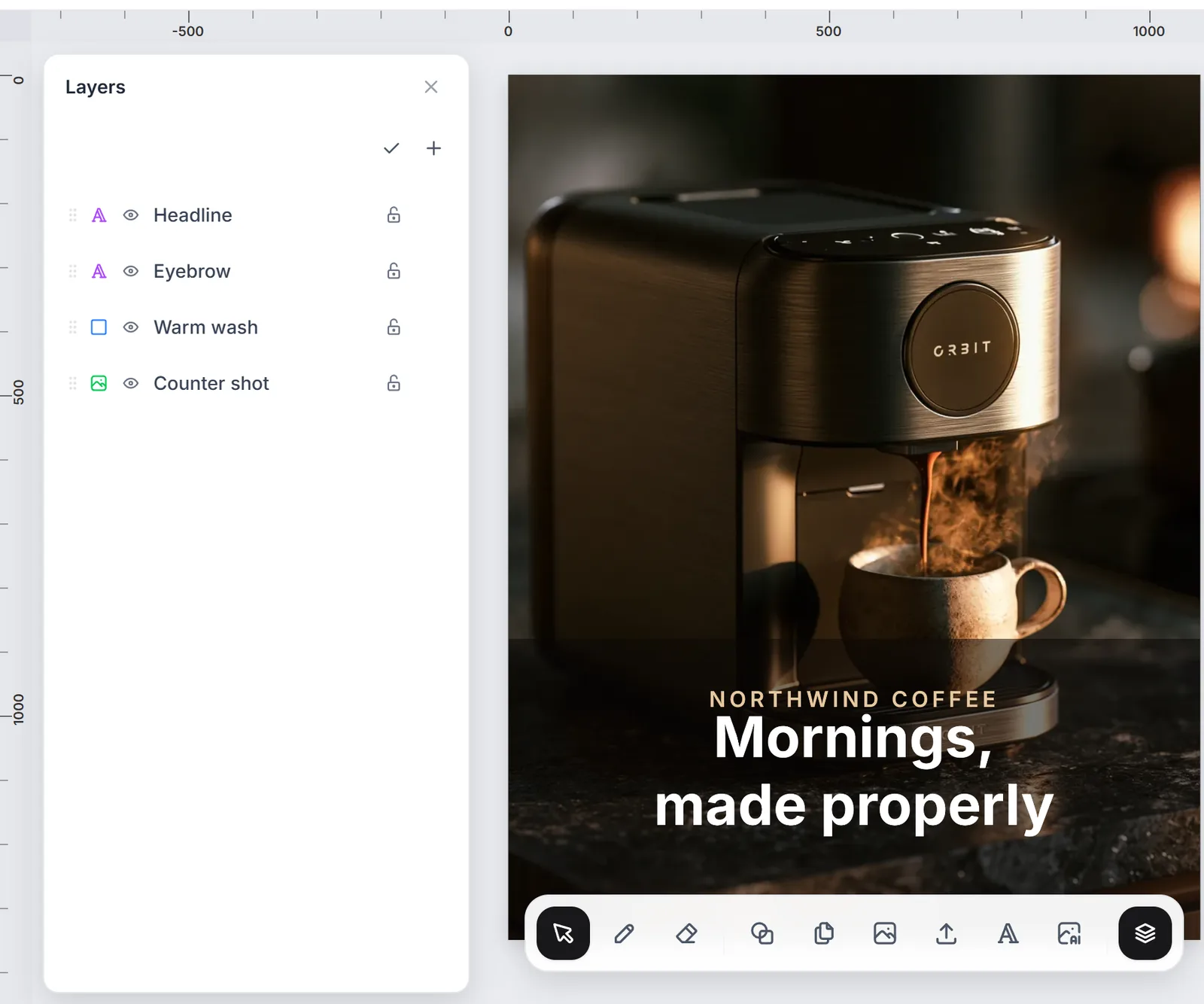
The same layer stack whether you are finishing a product shot or a render: type, washes and imagery stacked over the base.
Be careful what you imply. A generated visual reads as a photograph to a client. If the geometry has drifted from the drawing set, you're selling a building nobody has costed. Check the render against the plan before it leaves the studio.