September 8, 2026
A product launch film, start to finish
One espresso machine, six shots, a score and a finished cut. The whole path from a single product photograph to a film that holds together.
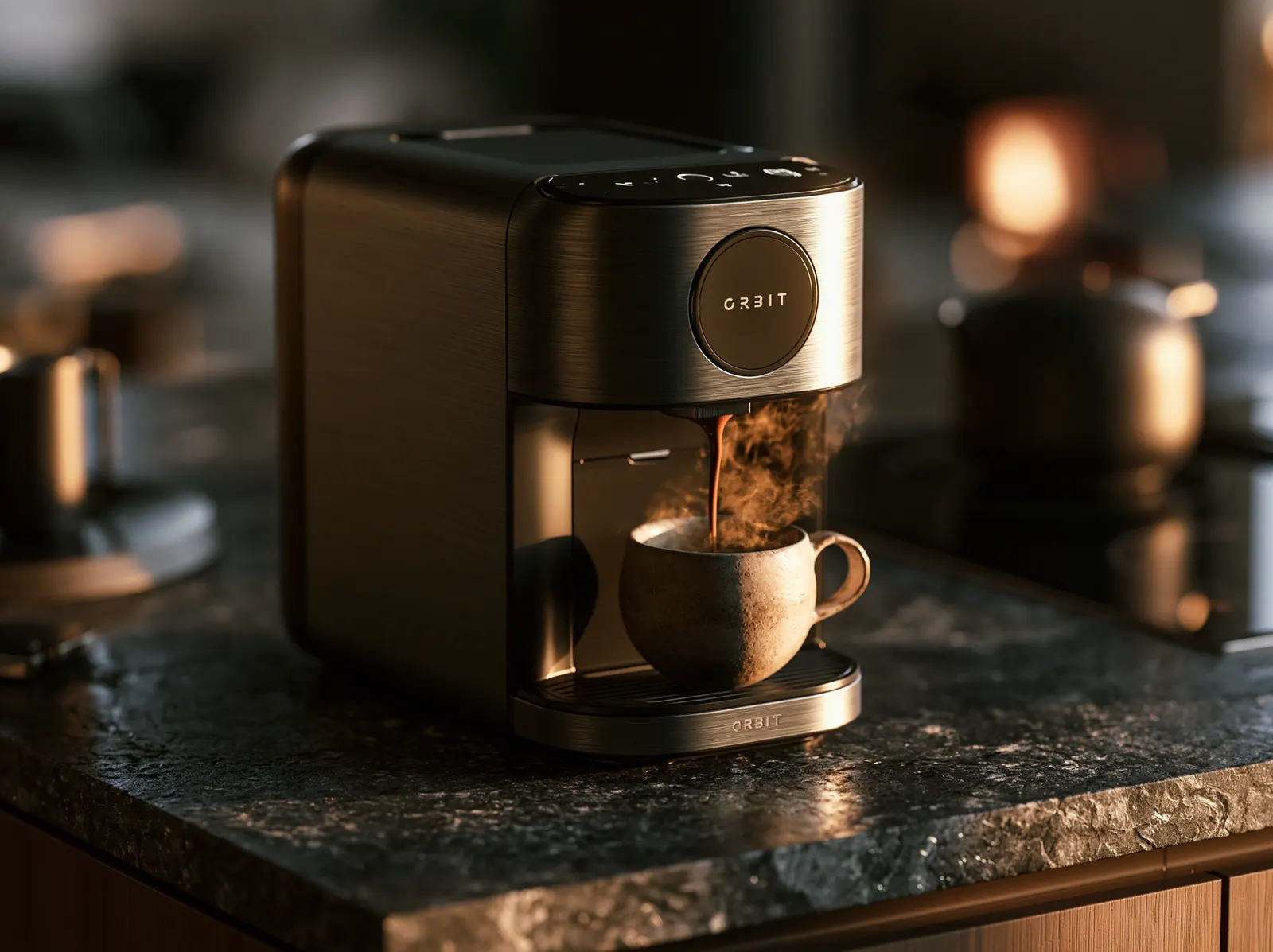
This is the job we built genvi for, so it's worth walking end to end. You've got a product nobody has filmed, a launch date, and a need for shots that look like they came from the same afternoon.
1. Pin the product down before you generate anything
The way AI product work fails is drift. Shot three has a different dial. Shot five loses the etched wordmark. So the product goes into the Reference Library first: one description of what never changes, plus whatever photographs you already have.
One real photograph is enough to anchor a reference. The paragraph describing it matters more.
Write the description for a model, not for a person. "Brushed stainless steel, one matte-black dial, the wordmark etched and not printed, no plastic trim" survives into every generation. "Looks premium" doesn't survive anything.
2. Build the shot list on a canvas
Each shot is a small branch: a text node for the subject, a shared art-direction node, a generation node. Because that direction node is shared, all six shots inherit the same grade, and changing it re-directs the whole film in one edit.
3. Move stills into motion
Feed your approved stills into video generation as start frames. Keep the movement small: a slow push, steam rising, light shifting across the counter. Product film lives on restraint, and short generated clips hold together far better than long ones.
4. Cut it in the composer
Drop the clips onto the timeline, lay a score underneath, and trim to the music instead of to the clip lengths. The composer plays it back in your browser and exports from there too.
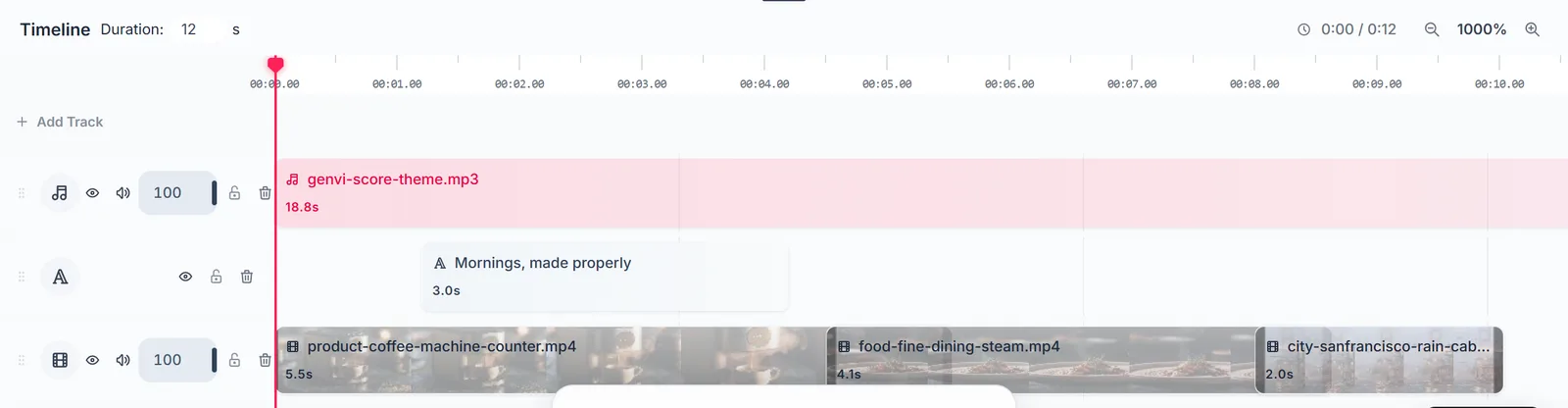
Video, text and audio tracks. Trim to the music, not to the footage.
What actually decides whether this works
- The reference, written once and written properly. Everything downstream inherits it.
- One shared art-direction node. Six independently prompted shots will not match, however careful you are.
- Short clips. Two to four seconds each. Cut more often instead of generating longer.
- Sound early. A rough score sitting in the timeline from the start changes how you trim everything.